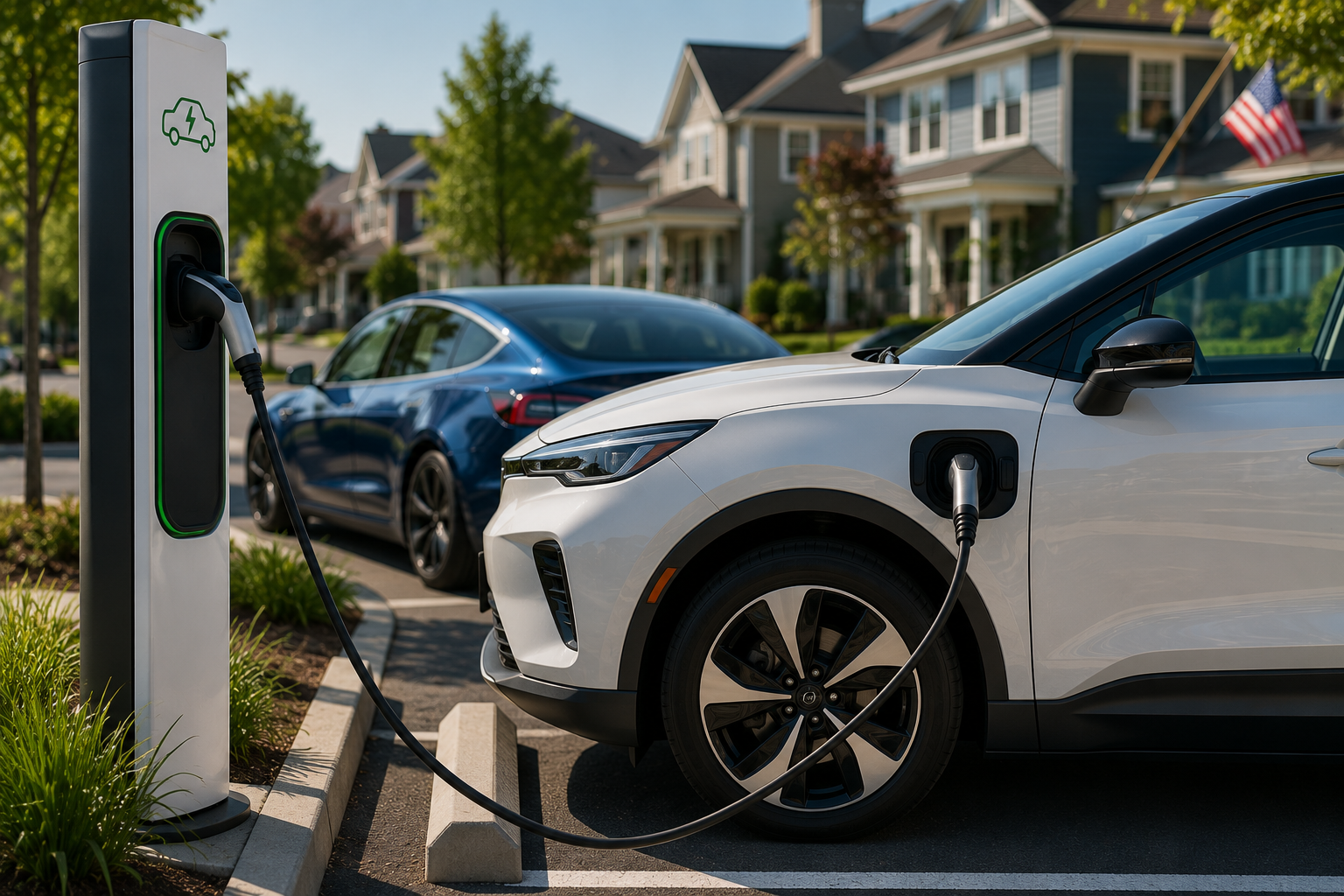







Electric vehicle adoption keeps climbing, and it’s natural to assume that anyone who installs a charging station is sitting on a gold mine. Minimal staffing, low upkeep, no fuel spills, no complicated engines — surely the margins have to be better than a gas station’s, right?
Not quite. The real economics of EV charging are far more nuanced, and the answer depends heavily on what type of charger you install, where you put it, and what else your business sells. Below, we break down what actually determines profitability — based on real numbers, real installation costs, and firsthand experience from people who have built and operated charging stations.
Level 2 vs. DC Fast Charging: Two Very Different Businesses
The first thing to understand is that “EV charging station” isn’t one business — it’s at least two, with completely different economics.
Level 2 (L2) chargers are the slower units you see in parking lots, hotels, and shopping centers. On their own, they rarely turn a direct profit. Their real value is indirect: they keep customers on-site longer, encourage repeat visits, and can be a competitive differentiator for hospitality businesses. A hotel that installs L2 chargers isn’t necessarily trying to make money from the electricity — it’s trying to win bookings from EV drivers who now filter their search results by charger availability.
DC Fast Chargers (DCFC or Level 3) are a different story. These require serious upfront capital — often well into six figures once you include the charging hardware, utility upgrades, and installation labor — but they can generate meaningful revenue if placed near major highways, interstates, or cities where EV traffic is constant. The catch is that fast charging only pencils out at volume. A DCFC sitting mostly idle can lose money for years.
What It Actually Costs to Install a Charger
Real-world figures shared by station owners give a useful sense of scale:
- A single commercial Level 2 charger typically costs somewhere between $3,500 and $15,000 to install, once you factor in hardware and electrical work.
- A DC fast charger is a much bigger investment. One convenience store owner described spending roughly $50,000 out of pocket on a single 50kW DCFC — even after receiving a $30,000 state grant — once utility infrastructure upgrades, the charger itself, and installation were added up.
- Utility companies are often the biggest bottleneck. Getting enough power capacity delivered to a site can cost as much as the charger itself, and utilities are sometimes reluctant to provide higher power allocations without significant additional fees.
- Universities and research institutions have reported similar costs: roughly $80,000 for a 150kW charger plus $20,000 for the three-phase transformer setup needed to support it.
This is why so many independent operators find the math discouraging. You’re not just buying a charger — you’re often paying to upgrade the electrical infrastructure feeding your building.
The Hidden Cost: Demand Charges
One detail that trips up a lot of first-time station owners is the demand charge — a separate fee that commercial utility customers pay based on the peak amount of power drawn, not just the total energy consumed. A DC fast charger can spike power demand dramatically for short bursts, and that peak draw can generate a large monthly charge even if the charger sees very little actual usage.
This is the core problem with low-traffic fast chargers: you might collect only a few hundred dollars a month in charging fees while owing thousands of dollars in demand charges alone. Volume is what makes DCFC stations profitable — a busy charger spreads the fixed demand-charge cost across many charging sessions, while a lightly used one absorbs it almost entirely as a loss.
Why Location and Amenities Matter More Than Price
A recurring theme is that EV drivers on road trips are often far less price-sensitive than station owners assume — as long as the location offers real value. Drivers consistently say they’ll happily pay a premium for a charger that’s paired with:
- A restaurant or place to sit down and eat
- Clean restrooms
- A grocery store or convenience store
- A safe, well-lit space, ideally with some shade
- A charging speed that roughly matches how long they plan to stay (a 50kW charger, for instance, pairs nicely with a 30–45 minute meal stop)
In other words, the charger itself is rarely the profit center — it’s the bridge to a different revenue stream. Convenience stores, hotels, and restaurants that install chargers often aren’t trying to profit from electricity sales directly; they’re using the charger to capture a captive customer for 30-60 minutes and monetize that time through food, drinks, or lodging.
This mirrors what many gas stations already know: fuel margins are razor-thin, and the real profit comes from what’s sold inside the store. A charging station without an attached retail or dining option is competing purely on electricity pricing, which is a much harder way to build a sustainable business.
What Do EV Drivers Consider a “Fair” Price?
Pricing expectations vary by region and by how remote the charger is, but a rough consensus emerges from driver feedback:
- Under $0.40–$0.45 per kWh is generally seen as reasonable, especially for a fast charger.
- $0.45–$0.60 per kWh is accepted, particularly in “charging desert” areas with no nearby alternatives, or when the station includes amenities like food.
- Above $0.60–$0.70 per kWh starts to feel comparable to gasoline costs, which noticeably discourages usage — unless there’s genuinely no other option nearby.
Interestingly, drivers repeatedly emphasize that on road trips, convenience and reliability matter more than price. Whether a charger works, whether it’s part of a trusted network, and whether there’s something to do nearby often outweighs a difference of a few cents per kWh. That said, a station pricing itself dramatically above nearby competitors — say, more than double a competitor within a mile — will lose customers on principle, even among drivers who otherwise don’t shop around aggressively.
The Volume Problem
Because most EV owners charge at home for a fraction of public charging rates, public stations only see heavy use from a relatively narrow group: road-trippers, apartment or condo dwellers without home charging access, and drivers in a pinch. This creates uneven demand — some networks see huge spikes around holidays and travel weekends, then sit quiet the rest of the time.
That volatility is part of why standalone, independently owned fast chargers in low-traffic areas struggle to break even, while large networks with scale (and better ability to average utilization across many locations) fare better.
Are Any Charging Networks Actually Profitable?
Large-scale networks with significant volume are the exception rather than the rule. Tesla’s Supercharger network is frequently cited as one of the more financially successful models — helped by consistently high utilization and a business structure where site hosts pay for land and installation while the network operator handles pricing and maintenance in exchange for a share of revenue.
Smaller or newer networks, by contrast, have had a rockier path. Several commenters pointed out that some major charging networks have historically operated at a loss while scaling up their infrastructure, especially after offering free or discounted charging promotions tied to vehicle purchases.
Are Public Chargers Ever Directly Profitable for an Independent Owner?
Based on the collective experience shared by real station owners, here’s a fair summary:
- A standalone Level 2 charger rarely generates direct profit. Its value is almost entirely in customer retention, foot traffic, and brand goodwill.
- A DC fast charger can be profitable, but only with meaningful traffic volume, manageable demand charges, and — ideally — proximity to an existing revenue stream like a restaurant, hotel, or retail store.
- Grants and incentives can significantly offset installation costs, but they rarely cover ongoing operational expenses like demand charges and maintenance.
- Remote “charging desert” locations can charge a premium, but low overall traffic volume often limits total revenue regardless of price.
- Bundling charging with food, retail, or lodging consistently outperforms selling electricity alone.
The Bottom Line
EV charging stations aren’t the effortless cash machine they might appear to be at first glance. The economics resemble gas stations more than people expect — thin margins on the fuel itself, with the real profit coming from what’s sold alongside it. Success depends less on the charger itself and more on strategic placement, adequate traffic volume, manageable utility costs, and a business model that captures value beyond the kilowatt-hour.
For entrepreneurs considering an investment, the clearest path forward is to treat the charger as a customer-acquisition tool rather than a standalone product — and to run the numbers on demand charges and utilization before breaking ground.