






If you’re collecting solar quotes in California right now, you’ve probably hit the same fork in the road I did: pay cash (or finance) and own the system outright, or sign a Power Purchase Agreement (PPA) and let a third party own it while you just buy the electricity it makes.
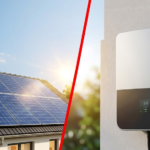
I went through this recently. My usage was around 3,500 kWh a year, but I’d just picked up an EV, which was going to roughly double that. When I got quotes for a 5.6 kW system with a Tesla Powerwall 3 and an EV charger, the numbers looked like this:
- Financing the system myself: about $33,000
- A prepaid PPA, with a six-year “ownership transfer” option, priced around $24,000 — with the system reverting to me at “fair market value” at that point
On paper, the PPA looked like the clear winner — almost $9,000 cheaper upfront. But the more I asked around and dug into the fine print, the murkier that “fair market value” language got. Talking to a few other homeowners who’d been through the same decision, and to people who work in the industry, taught me more than any sales pitch did. Here’s what I picked up, what’s changed recently, and how I’d think about this if I were starting over.
First, a Quick Refresher: What Is a Solar PPA?
A Power Purchase Agreement is an arrangement where a solar company (or a financing partner) installs panels on your roof but keeps ownership of the system. Instead of paying for the hardware, you agree to buy the electricity it produces at an agreed rate — usually lower than your utility’s rate, often with a modest annual escalator.
A prepaid PPA is a variation where you pay a lump sum upfront instead of a monthly per-kWh rate. It behaves a lot like a lease: you get the savings of solar without owning the equipment, and in many contracts you get an option to purchase the system outright after a set number of years — often five or six.
That purchase option is exactly where my concerns started.
The “Fair Market Value” Problem
Here’s the issue I kept running into: a lot of prepaid PPA contracts don’t specify a dollar figure for the year-five or year-six buyout. Instead, they use language like “fair market value at time of transfer” — which sounds reasonable until you realize nobody can actually tell you today what that number will be.
One person I spoke with who works in the industry explained that some providers pair this vague contract language with a separate, informal memo promising a token or $0 buyout — but that memo usually isn’t part of the binding contract, and installers rarely even ask you to sign it. If the fair-market-value clause is the only enforceable part of the deal, you could end up owing far more than expected to actually take ownership of panels you’ve already been paying for.
A few things I learned to check before signing anything:
- Ask for the buyout formula in writing, inside the contract — not a side letter, not a verbal promise. If a company can’t or won’t commit to a specific formula (even a depreciation schedule tied to system cost and age), I’d treat that as a red flag.
- Check the assignment clause. Can the solar company sell or transfer your contract to a third party without your consent? If so, a new owner has no obligation to honor any informal promises the original company made — only what’s actually written into the contract.
- Ask what happens if they don’t transfer the system on schedule. A reputable agreement should spell out penalties on the company for delays, not just obligations on you.
- Do the math yourself. One rough estimate that helped me: take the system’s cash price, subtract the tax credit the seller can still claim, divide by the total warranty years, then multiply by the years remaining at your buyout date. It’s not exact, but it gives you a reference point to sanity-check whatever number the company eventually quotes.
None of this means every PPA is a bad deal — it just means I wouldn’t sign one where the biggest financial clause in the whole contract is left undefined.
Why the Math Changed Dramatically in 2026
Here’s something I didn’t fully appreciate until I dug in further, and it’s the single biggest factor in this decision right now: the federal residential solar tax credit is gone for cash and loan purchases.
Under the One Big Beautiful Bill Act, signed in mid-2025, the 30% Residential Clean Energy Credit (Section 25D) — the incentive that’s underpinned nearly every solar cash-flow calculation for over a decade — expired for homeowner-owned systems installed after December 31, 2025. If you buy or finance solar in 2026, you get $0 in federal credit.
That flips a lot of the “conventional wisdom” I’d heard about buying versus leasing. In years past, most people I talked to leaned toward ownership because the 30% credit made cash and loan deals so much cheaper. That’s no longer automatically true.
Third-party-owned systems — leases and PPAs — still get a version of the credit, just through a different part of the tax code (Section 48E, the commercial investment tax credit), which the installer claims and can pass along to you as a lower rate. That pathway remains available for systems placed in service through 2027. In practical terms, a prepaid PPA in 2026 might be the only realistic way for many California homeowners to capture any federal solar incentive at all — which is part of why my own PPA quote came in so much cheaper than financing.
This is genuinely new territory, and I’d suggest running your specific numbers by a tax professional rather than assuming last year’s rules of thumb still apply.
California’s Net Metering Rules Make Batteries Non-Negotiable
The other thing my quotes all had in common — the Tesla Powerwall 3 — turned out to be less optional than I expected.
California shifted to NEM 3.0 (officially the Net Billing Tariff) in April 2023. Under the old NEM 2.0 rules, exporting surplus solar power to the grid earned close to the full retail electricity rate. Under NEM 3.0, exports are valued using an “avoided cost” calculation tied to wholesale prices — typically 75% lower than before.
The practical result: solar-only systems in California now often take 9 to 13 years to pay back, versus 5 to 6 years under the old rules. Pairing solar with battery storage brings that back down to a more reasonable 7 to 9 years, because a battery lets you use your own power during expensive evening hours instead of selling it to the grid for pennies.
That’s why every serious quote I got included a battery, and it’s worth questioning any quote that doesn’t. If you’re comparing offers and one skips storage, ask why, and run the numbers both ways.
One exception worth knowing: if your system was interconnected before April 15, 2023, you’re grandfathered onto your original NEM terms for 20 years, and none of this applies to you yet.
PPA vs. Cash: A Side-by-Side Look
Prepaid PPA / Lease
- Lower upfront cost in many cases, especially now that it’s the main path to a federal credit
- Company handles maintenance and monitoring for the life of the agreement
- Buyout terms can be vague — get the formula in writing
- You don’t build home equity from the system the way an owner does
- Selling your home can be more complicated; buyers may need to qualify to assume the agreement
- 25-year equipment and battery warranties are common, versus roughly 10 years on many owned systems
Cash Purchase or Loan
- No federal tax credit in 2026 for newly installed systems (a major shift from prior years)
- You own the system outright — no transfer negotiation, no third-party dependency
- Full control to modify, add batteries later, or sell the home without transfer complications
- Higher upfront cost, but all future savings are 100% yours
- Shorter standard equipment/battery warranty windows unless you pay for extensions
- Long-run savings over 20-25 years are typically higher once the system is paid off, assuming you stay in the home
There isn’t a universally “correct” answer. It genuinely depends on your cash position, how long you plan to stay in the home, your tax situation, and how comfortable you are with a contract that includes a future negotiation point (the buyout).
A Practical Checklist Before You Sign Anything
- Get the buyout price mechanism in writing, inside the actual contract — not a verbal assurance or a separate unsigned memo.
- Read the assignment clause. Confirm whether the company can sell your contract to someone else, and what protections carry over if they do.
- Confirm who’s claiming the tax credit and whether that’s reflected transparently in your quoted price.
- Check your utility. NEM 3.0 applies to PG&E, SCE, and SDG&E. Municipal utilities like LADWP and SMUD run their own, often more favorable, programs — so a PPA’s value proposition can look quite different depending on where you live.
- Size the system to your near-future usage, not your past usage. If you’ve just added an EV (or are planning to electrify your home, add a pool, etc.), size for that now — NEM 3.0 allows systems up to 150% of your annual usage for exactly this reason.
- Get at least two or three quotes, including at least one cash/loan quote and one PPA quote, so you can compare real numbers instead of general advice.
- Ask about the battery warranty specifically, since it’s often the single biggest maintenance cost over 20+ years and terms vary widely between owned and third-party-owned systems.
The Bottom Line
The most important thing I took away from this whole process: don’t sign a contract where the biggest dollar figure is left as a question mark. “Fair market value” isn’t a red flag by itself, but it is a placeholder — and placeholders need to be pinned down before you commit, not after.
Beyond that specific concern, the broader landscape shifted meaningfully in 2026. With the federal residential tax credit gone for cash buyers and NEM 3.0 reshaping the math around batteries, the PPA-vs-cash decision isn’t the same conversation it was even two years ago. Run your own numbers, get every promise in writing, and don’t be afraid to ask a solar company to prove, contractually, that they’ll follow through on what their sales rep told you verbally.
This post is for general information only and isn’t tax or legal advice. Solar contract terms, tax credit eligibility, and net metering rules vary by installer, utility, and individual circumstances — talk to a licensed tax professional and read your full contract before signing.