









Is Your HOA Management Company Ignoring You? Here’s What Homeowners Can Do
Poor communication from an HOA management company can quickly turn everyday homeownership into a frustrating experience. Whether you’re waiting for a response about maintenance, trying to pay your dues, or looking for answers about inspections, being ignored can leave you feeling powerless. The good news is that homeowners have more options than they often realize.
In this guide, we’ll explain why HOA management companies sometimes become unresponsive, what your rights are, and the practical steps you can take to resolve the problem without making the situation worse.
Why Do HOA Management Companies Become Unresponsive?
Many homeowners assume that unanswered emails or delayed phone calls mean the management company simply doesn’t care. While that can occasionally be true, there are often several reasons behind poor communication.
Some management companies oversee dozens—or even hundreds—of communities at the same time. If they don’t have enough staff, response times can quickly suffer. High employee turnover is another common issue. When experienced community managers leave, new employees may not be familiar with your neighborhood or pending requests.
Company mergers and acquisitions can also affect service quality. When a smaller management company is absorbed into a larger organization, homeowners sometimes notice slower responses, inconsistent communication, and reduced personal attention.
Regardless of the reason, homeowners should not have to accept poor service indefinitely.
Is This a Common Problem?
Unfortunately, delayed responses from HOA management companies are more common than many people expect.
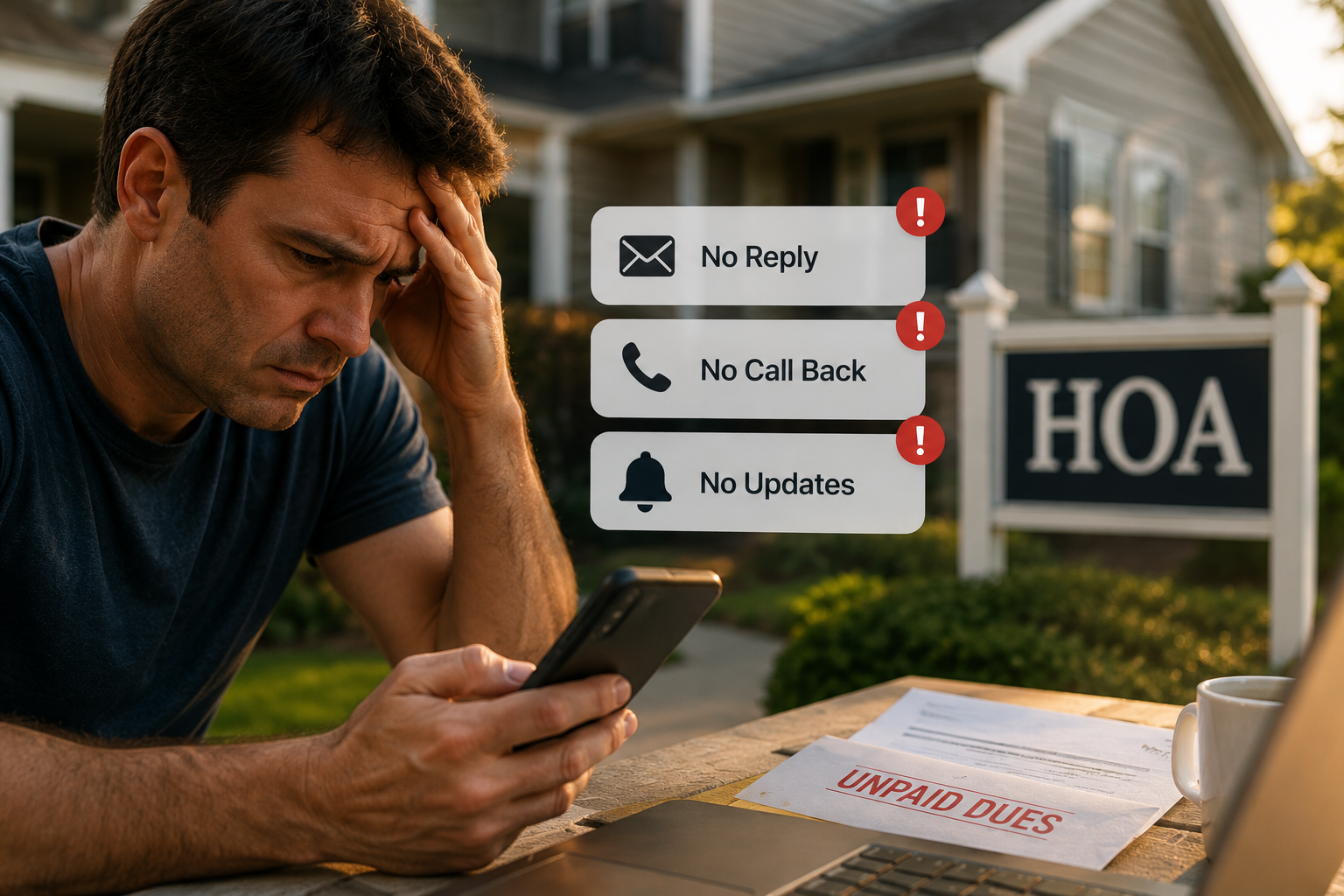
Common complaints include:
- Emails that go unanswered for days or weeks.
- Phone calls that are never returned.
- Delays in processing payments or account requests.
- Poor communication regarding inspections.
- Confusing or inconsistent information from different employees.
- Long waits for maintenance approvals.
Although these issues are widespread, they should never become the standard your community accepts.
Understanding the Difference Between the HOA Board and the Management Company
One of the biggest misunderstandings among homeowners is believing that the management company runs the HOA independently.
In reality, the HOA board generally makes the major decisions for the community. The management company works under a contract to carry out those decisions and handle day-to-day operations.
This distinction is important because if the management company consistently fails to perform its responsibilities, the HOA board usually has the authority to:
- Require better performance.
- Enforce contract requirements.
- Demand corrective action.
- Replace the management company when appropriate.
Knowing who is responsible can save homeowners from directing complaints to the wrong people.
Start by Documenting Everything
Before escalating the issue, begin creating a detailed record of every interaction.
Maintain a simple communication log that includes:
| Date | Method | Issue | Response |
| July 10 | Payment portal access | No response | |
| July 12 | Phone | Left voicemail | No callback |
| July 15 | Maintenance request | Automated reply only |
Also save:
- Emails
- Letters
- Screenshots
- Voice messages
- Online support tickets
- Maintenance requests
Good documentation becomes valuable if the issue continues or requires board involvement.
Give the Company a Fair Opportunity to Respond
Not every delayed response indicates negligence.
If your request isn’t urgent, consider sending one polite follow-up after several business days.
For example:
“Hello, I’m following up regarding my previous email about my account access. I’d appreciate an update whenever possible. Thank you.”
Professional communication is far more effective than emotional messages.
Contact Your HOA Board
If repeated attempts to reach the management company fail, the next step is contacting your HOA board.
Many homeowners forget that the board represents the community—not the management company.
Explain:
- When you first contacted management.
- How many follow-up attempts you’ve made.
- Why the issue matters.
- Copies of your communication history.
Most board members want to know if homeowners are experiencing repeated service failures because they are responsible for overseeing the management company’s performance.
Attend HOA Meetings
Board meetings provide homeowners with an opportunity to raise concerns publicly.
Instead of simply saying,
“Management never answers.”
Present specific examples:
- Number of unanswered emails.
- Delayed maintenance requests.
- Missed deadlines.
- Communication failures affecting multiple residents.
Objective information encourages productive discussions rather than emotional debates.
If several homeowners have experienced similar issues, encourage them to share their experiences respectfully.
Ask About Service Standards
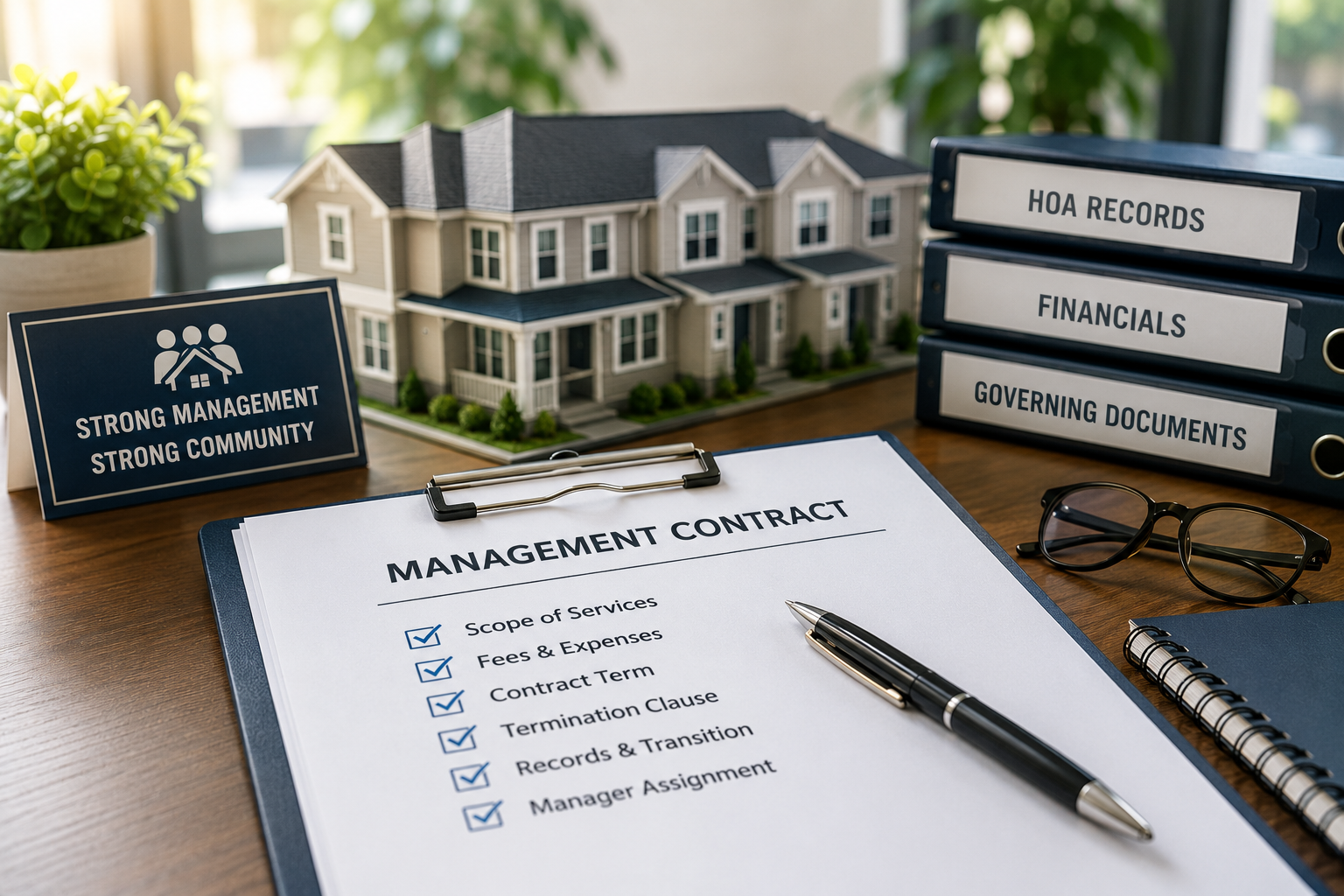
Many HOA management contracts include expected service levels.
Examples may include:
- Response within 24–48 hours.
- Emergency calls handled immediately.
- Maintenance requests acknowledged within a certain timeframe.
- Financial questions answered promptly.
If these standards exist but aren’t being met, the HOA board may have contractual grounds to require improvements.
Know When Poor Service Becomes a Bigger Concern
Slow customer service is frustrating.
However, some situations require faster action because they may involve safety or legal responsibilities.
Examples include:
- Fire safety concerns.
- Water leaks affecting multiple units.
- Security gate failures.
- Unsafe common areas.
- Hazardous electrical issues.
- Structural damage.
If management repeatedly ignores genuine safety concerns, document everything and notify the HOA board immediately.
Do Online Reviews Actually Help?
Many homeowners immediately think about leaving negative online reviews.
While reviews can warn future customers, they rarely solve ongoing operational problems by themselves.
Instead of relying solely on reviews, prioritize:
- Direct communication.
- Written documentation.
- Board involvement.
- Formal complaints through proper channels.
Reviews are generally most effective when combined with other efforts rather than used as the only solution.
Should the HOA Replace the Management Company?
Replacing a management company is a significant decision.
Before making that choice, boards often consider questions such as:
- Has communication consistently failed?
- Are financial responsibilities being handled properly?
- Are maintenance issues being ignored?
- Is homeowner satisfaction declining?
- Has management failed to improve after repeated feedback?
If multiple concerns continue over an extended period despite corrective efforts, exploring alternative management companies may become a reasonable option.
However, changing companies isn’t always simple.
How to Escalate Your Complaint Professionally
If weeks pass without meaningful communication, it may be time to escalate the matter in a professional and documented way.
A formal written complaint should include:
- Your name and property address.
- A clear summary of the issue.
- Dates of previous emails and phone calls.
- Copies of relevant correspondence.
- The outcome you’re requesting.
- A reasonable deadline for a response.
Avoid emotional language or personal attacks. A calm, factual letter is much more likely to receive serious attention from both the management company and the HOA board.
For example, instead of writing:
“Your company never does anything right.”
Write:
“Despite four emails and two phone calls over the past three weeks regarding my maintenance request, I have not received a response. I respectfully request an update within five business days.”
Professional communication creates a stronger record if the issue later requires additional action.
Can Homeowners Take Legal Action?
Many homeowners wonder whether an unresponsive HOA management company is breaking the law.
The answer depends on the situation.
Poor customer service, delayed emails, or slow communication are generally not illegal by themselves. However, if a management company’s actions result in significant financial loss, violate contractual obligations, ignore legal responsibilities, or create safety hazards, additional legal options may become available.
Before considering legal action:
- Review your HOA’s governing documents.
- Read the management agreement if available.
- Discuss concerns with the HOA board.
- Consult a qualified attorney if the issue involves substantial financial or legal consequences.
In many cases, resolving the issue through the board is faster and less expensive than litigation.
What if Your HOA Is Too Small to Find Another Management Company?
One challenge that many homeowners overlook is the size of their community.
Large management companies often prefer communities with hundreds of homes because they generate more revenue. Small condominium associations or neighborhoods may receive fewer proposals when searching for new management services.
This can make replacing a management company more difficult than many homeowners expect.
If your HOA is relatively small, consider these options:
- Request service improvements before terminating the contract.
- Obtain proposals from several local companies instead of only large national firms.
- Explore regional management companies that specialize in smaller communities.
- Negotiate revised service expectations with your current provider.
Replacing a management company should always be viewed as a long-term decision rather than a quick fix.
Is Self-Management an Option?
Some homeowners wonder whether managing the HOA themselves could solve communication problems.
Self-management means the HOA board assumes responsibilities that are normally handled by a management company.
These responsibilities may include:
- Collecting dues.
- Paying vendors.
- Maintaining financial records.
- Coordinating repairs.
- Scheduling inspections.
- Communicating with homeowners.
- Enforcing community rules.
Self-management can reduce costs and provide more direct oversight, but it also requires significant volunteer time, organization, and financial knowledge.
For smaller communities with active board members, it may be a practical option. For larger associations, hiring a professional management company is often the more sustainable solution.
How HOA Boards Can Prevent Future Communication Problems
Rather than waiting for complaints to accumulate, proactive boards can establish clear communication expectations from the beginning.
Some effective practices include:
Set Response-Time Standards
Establish written expectations for responding to homeowner inquiries. Even a simple acknowledgment within one or two business days helps build trust.
Track Performance Regularly
Review management performance during board meetings instead of waiting until contract renewal.
Encourage Resident Feedback
Provide homeowners with an easy way to report recurring issues so problems are identified early.
Review Contracts Carefully
Before renewing a management agreement, evaluate whether the company has consistently met its obligations.
Maintain Transparency
Share important updates through newsletters, emails, or community portals so residents stay informed without needing to repeatedly contact management.
Strong communication reduces frustration for everyone involved.
Common Mistakes Homeowners Should Avoid
When dealing with an unresponsive management company, avoid these common mistakes:
1. Waiting Too Long
Delaying action allows small issues to become larger problems.
2. Relying Only on Phone Calls
Always follow important conversations with written communication.
3. Contacting the Wrong Person
Know whether your concern should be directed to management or the HOA board.
4. Becoming Aggressive
Professional communication is far more effective than hostile messages.
5. Failing to Keep Records
Without documentation, it becomes much harder to demonstrate recurring service failures.
Frequently Asked Questions
Can an HOA management company ignore homeowner emails?
While occasional delays happen, management companies should respond within a reasonable timeframe. Repeated failure to communicate should be reported to the HOA board.
Who is responsible for overseeing the management company?
The HOA board typically supervises the management company and is responsible for ensuring that contractual obligations are fulfilled.
Can homeowners fire the management company?
Individual homeowners usually cannot terminate the management company’s contract. That decision is generally made by the HOA board according to the association’s governing documents and contract terms.
Should I leave a negative online review?
Honest reviews can inform others, but they rarely solve ongoing communication problems. It’s generally more effective to document issues and work through the HOA board first.
What should I do if the issue involves safety?
Immediately notify both the management company and the HOA board in writing. If there is an immediate danger to people or property, contact the appropriate emergency services or local authorities as necessary.
How long should I wait before following up?
If you haven’t received a response within several business days, send a polite follow-up. Keep records of each communication attempt.
Can changing management companies solve the problem?
Sometimes. However, changing companies isn’t always easy, and success depends on selecting a provider with a strong track record, clear service standards, and adequate staffing.
Why do management companies become less responsive after mergers?
Following mergers or acquisitions, companies may experience staffing changes, heavier workloads, new systems, or organizational restructuring, all of which can temporarily affect customer service.
What documents should homeowners keep?
Save emails, letters, payment records, maintenance requests, inspection notices, meeting minutes, and any responses related to your concern.
Can attending board meetings make a difference?
Yes. Presenting documented concerns during board meetings helps ensure that leadership is aware of recurring issues and can discuss potential solutions.
Final Thoughts
An unresponsive HOA management company can create unnecessary stress, confusion, and delays for homeowners. While occasional communication problems are understandable, repeated service failures should never become the norm.
The most effective approach is usually a combination of patience, professionalism, and documentation. Start by keeping detailed records, communicate clearly, and involve your HOA board when necessary. Since management companies work on behalf of the association, boards have both the authority and the responsibility to address ongoing performance issues.
For communities considering a management change, remember that replacing a company is a major decision. Carefully evaluate alternatives, review contracts, and ensure any new provider is equipped to meet your community’s needs.
Ultimately, strong communication, transparency, and accountability are the foundation of a well-managed HOA. Homeowners who stay informed, participate in board meetings, and document concerns constructively are often in the best position to help improve their community for everyone.